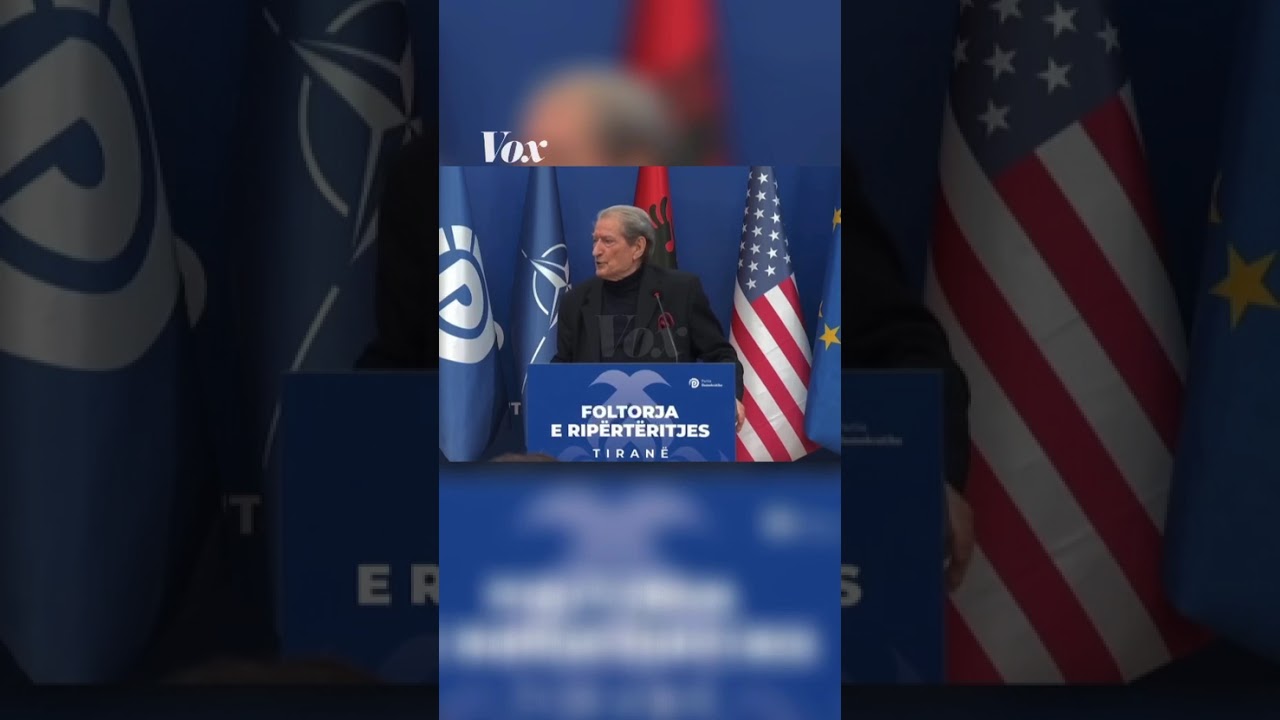
Tirana, the big question mark for Rama and Berisha
2026-11-22 16:45:00Focus


Countries have failed to reach a major new agreement to tackle climate change, as the UN COP31 talks in Turkey highlighted deep divisions over fossil fuels and money.
The negotiations were supposed to end on Friday, but continued late into Sunday in search of common ground, becoming the longest UN climate conference in history.
But the final agreement proved unacceptable to the EU, Pacific island nations and others because it did not directly mention fossil fuels, the main cause of global warming.
Meanwhile, many poorer countries objected to the lack of any clear financial commitment from richer countries to help them adapt to the impacts of rising temperatures.
The last time a major political agreement of a COP was not rejected in this way was in 2009 in Copenhagen.
UN Secretary-General Antonio Guterres, at his last Women's Coordination Conference (COP) before resigning, said he was "deeply disappointed".
He attacked what he called “powerful fossil fuel interests,” who he said were taking “a page from Big Tobacco’s playbook: distorting science, delaying policy, blocking action, and reaping huge profits while people everywhere pay the price.”
Australian Prime Minister Anthony Albanese, whose country was a co-host of the talks, attributed the failure to "difficult geopolitical times."
"This is the reality," he said Monday.
After two weeks of negotiations, exhausted delegates were presented with a new draft agreement in the early hours of Sunday in an attempt to break the deadlock.
But the words “fossil fuels” did not appear anywhere in the text. The only indirect reference to coal, oil and gas was an allusion to an agreement reached at COP28 in 2023, when countries agreed to “phase out” fossil fuels in their energy systems.
The EU representative, Irish Minister Darragh O'Brien, made it clear that the EU opposed it "strongly", saying that "the decisions fall nowhere near the level of ambition needed to tackle climate change".
"It is unreasonable to have a climate pact that does not mention fossil fuels," he said.
Other countries, such as Panama and the Marshall Islands, also criticized the agreement for not doing enough to address the pace of climate change.
A first draft of the agreement on Monday mentioned "fossil fuels" six times, but this was unacceptable to oil-producing countries.
Saudi Arabia's delegate, Mohammad Ayoub, said Arab countries "continued to engage in good faith," but argued that they accounted for only a small portion of historical greenhouse gas emissions.
Russia warned against "returning to slogans" on coal, oil and gas, claiming that if countries moved away from fossil fuels too quickly, it would lead to "fuel poverty".
Climate advocates reacted with disappointment to the failure of the talks.
Former US vice president and climate advocate Al Gore said it was "scandalous that a handful of petroleum-rich countries have veto power over any mention of fossil fuels."
The COP process “needed significant reform,” Gore wrote in X, as most countries sought to “move forward in good faith.”
"It is time to empower these leaders with a revitalized multilateral process that reflects the latest science and represents the will of the majority of the world," he added.
Another significant sticking point has been providing money for poorer countries to adapt to the impacts of climate change, such as more intense heat waves and more severe droughts.